Concrete Leveling
Fix sunken and uneven concrete slabs without replacement using proven leveling techniques.
Why Concrete Settles and Sinks
Concrete slabs sink when the soil beneath them compresses, erodes, or shifts. This happens for several reasons including poorly compacted fill soil during construction, water washing away soil from under the slab, soil shrinkage during dry periods, and natural settling of disturbed ground. At STC St George Concrete, we see settlement issues frequently in St. George because our soil contains clay that expands when wet and shrinks when dry, creating movement that affects concrete above.
Settlement creates several problems beyond just looking bad. Uneven surfaces are trip hazards that can cause injuries. Water pools in low spots instead of draining properly, which can worsen the settlement problem. Gaps form between slabs creating larger cracks and more dramatic height differences. For driveways, settlement can damage vehicles that scrape on uneven transitions. Near foundations, settled concrete can direct water toward your home.
Many people assume settled concrete needs complete removal and replacement. However, concrete leveling offers a faster, less expensive alternative when the concrete itself remains in good condition. Leveling raises sunken slabs back to their original position by filling voids underneath and stabilizing the base. The process costs typically 50 to 70 percent less than replacement and causes far less disruption to your property.
Signs You Need Concrete Leveling
- Visible gaps or height differences between concrete sections
- Slabs that rock or move when you walk on them
- Water pooling on surfaces that should drain
- Cracks along joints where slabs meet
- Settled sections near foundations or walkways
- Uneven garage floor transitions causing scraping
- Sunken sidewalk sections creating trip hazards
- Voids visible along slab edges or control joints
Concrete Leveling Techniques
Mudjacking and Slabjacking
Mudjacking, also called slabjacking, involves pumping a slurry mixture under the settled slab through holes drilled in the concrete. The material fills voids and creates pressure that lifts the slab back to the proper level. Traditional mudjacking uses a cement-based slurry mixed with soil or sand. The mixture is heavy enough to compact and stabilize weak soil while providing permanent support for the slab above.
The process requires drilling holes about 1.5 to 2 inches in diameter through the slab at strategic locations. We pump material under the slab, monitoring carefully to achieve the correct lift amount. Once level, we patch the holes with concrete to match the existing surface. The slab can typically handle light foot traffic within hours and full loads within a day. Mudjacking works well for walkways, patios, and driveways with moderate settlement.
Polyurethane Foam Injection
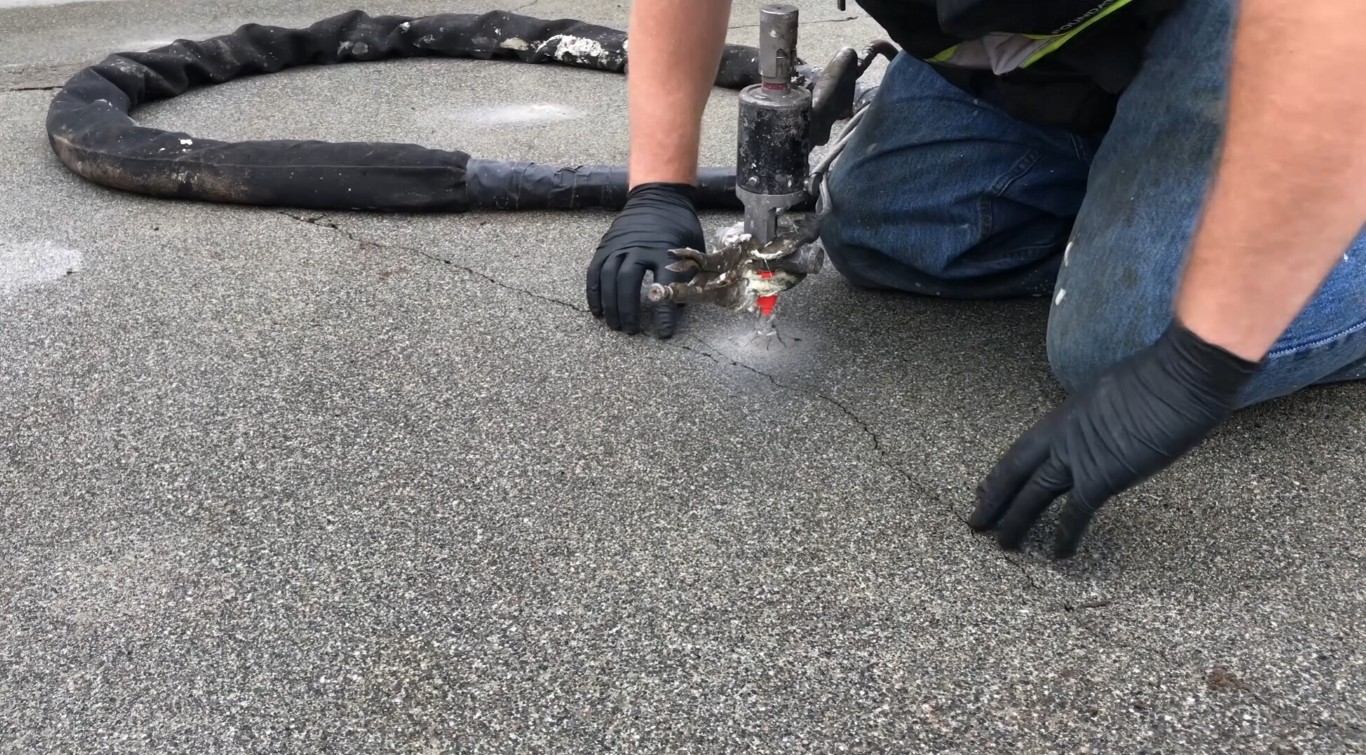
Polyurethane foam leveling uses expanding foam injected through smaller holes, typically 5/8 inch diameter. The foam expands to fill voids and lift the slab with controlled pressure. This method offers several advantages including lighter weight that does not add stress to weak soils, faster curing time with the slab ready for use in hours, smaller injection holes that are less visible after patching, and precise control over lift amounts.
Foam leveling costs more than traditional mudjacking but works well for situations where minimal disruption is important or where soil cannot support heavy fill materials. The foam is waterproof and does not wash out, making it effective in areas with drainage problems. However, foam may not work as well for very large voids or situations requiring significant soil stabilization. We evaluate your specific situation and recommend the most appropriate method.
When Leveling Makes Sense
Concrete leveling works best when the concrete itself is in good condition without extensive cracking or surface deterioration. The slabs should be at least 3 to 4 inches thick with adequate strength. Settlement should be moderate, typically less than 4 to 6 inches. Very heavy settlement may indicate serious soil problems that leveling alone cannot address. We honestly assess whether leveling or replacement makes more sense for your situation.
How Concrete Leveling Works
Concrete leveling projects start with careful evaluation of the settlement pattern and causes. We inspect the slabs to determine how much they have sunk, identify voids underneath, and assess the soil conditions. Understanding why settlement occurred helps us plan the leveling approach and address underlying problems so the issue does not recur. Sometimes we need to improve drainage or make other corrections along with the leveling work.
During the leveling process, we drill injection holes at calculated locations based on the void pattern and required lift. For mudjacking, we position holes to distribute material effectively under the entire settled area. For foam injection, holes are typically placed near the center of voids. We mix materials to proper consistency and begin pumping under the slab while monitoring the lift carefully.
Achieving proper lift requires skill and experience. We monitor the slab movement constantly to avoid over-lifting or creating new problems. The material flows through voids seeking the path of least resistance, so we adjust injection locations and amounts as needed. For slabs with multiple settled areas, we work systematically to level the entire surface evenly. The goal is to restore the slab to its original elevation and stabilize it against future settlement.
After leveling, we patch injection holes to match the existing concrete as closely as possible. We also seal cracks and joints to prevent water infiltration that could cause future problems. Most leveling projects take one day or less, and you can use the concrete shortly after completion. This minimal downtime is a major advantage compared to replacement projects that can take a week or more and require complete removal of old concrete.
Frequently Asked Questions
Fix Your Sunken Concrete Today
Get settled concrete leveled quickly and affordably with STC St George Concrete. Contact us for a free evaluation and estimate.
Call (435) 879-3156